Service 03 · Trenchless construction
Pipe Ramming / Air Hammering
Drive steel casing with pneumatic force when the ground is too loose for an open bore and a directional drill is not the best tool for the crossing.

Service 03 · Trenchless construction
Drive steel casing with pneumatic force when the ground is too loose for an open bore and a directional drill is not the best tool for the crossing.
What it does
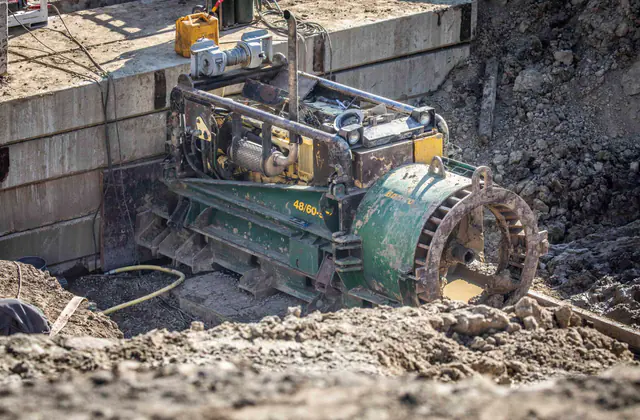
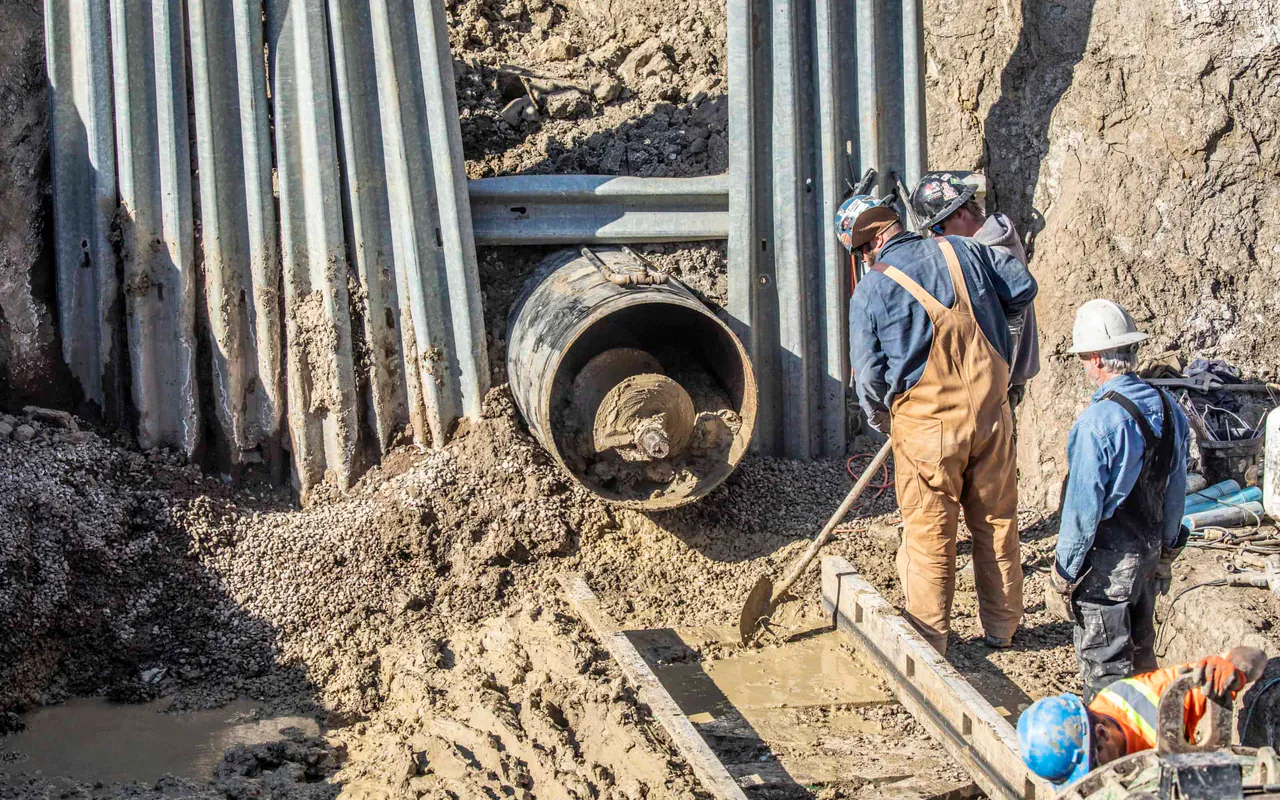
Pipe ramming uses a pneumatic hammer to drive steel casing horizontally through the ground. The leading edge stays open, allowing the soil inside the casing to be removed after each section is installed.
The method can work well in gravel, sand, cobble and wet or flowing conditions. It is also used to install conductor barrels and to line selected old culverts with new steel casing.
Syncore's published fleet includes an 18-inch pneumatic hammer and experience installing casing up to 42 inches in suitable conditions.
Good fit for
Plan the work
A launch pit, receiving area, casing size, required grade and geotechnical information help determine whether ramming is the right method.
The crew plans for spoil removal from inside the casing and safe handling of each steel section.
Where exact line and grade are critical, guided augering may be a better choice. Syncore can review both options.
Pipe ramming FAQ
These are the questions that help determine whether this is the right method for the job.
It can work well in loose or unstable soil, including gravel, sand, cobble and wet or flowing conditions. It is not a method for driving directly through solid rock.
Syncore publishes casing installations up to 42 inches in suitable conditions. The practical size depends on length, ground, pit access, grade and the casing design.
The casing is driven open-ended. Material enters the steel pipe and is removed as the installation progresses or after the section is in place, depending on the project plan.
Ramming is generally less steerable than a guided auger system. If tight line and grade tolerances are essential, Syncore will review whether guided boring is the better fit.
Sometimes. A new casing may be rammed or installed through a suitable failed culvert. The existing structure, alignment, access and final diameter all need to be checked first.
Start with the crossing
Send the route, pipe size, location and timing. Syncore will help work out a practical next step.